
The Stone Spa at Home: Wet Rooms and Wellness Baths
The modern bathroom is becoming more than a place to get ready. It is increasingly designed as a private wellness space: a room for slowing down, restoring, and creating a daily ritual around water, warmth, and natural materials.
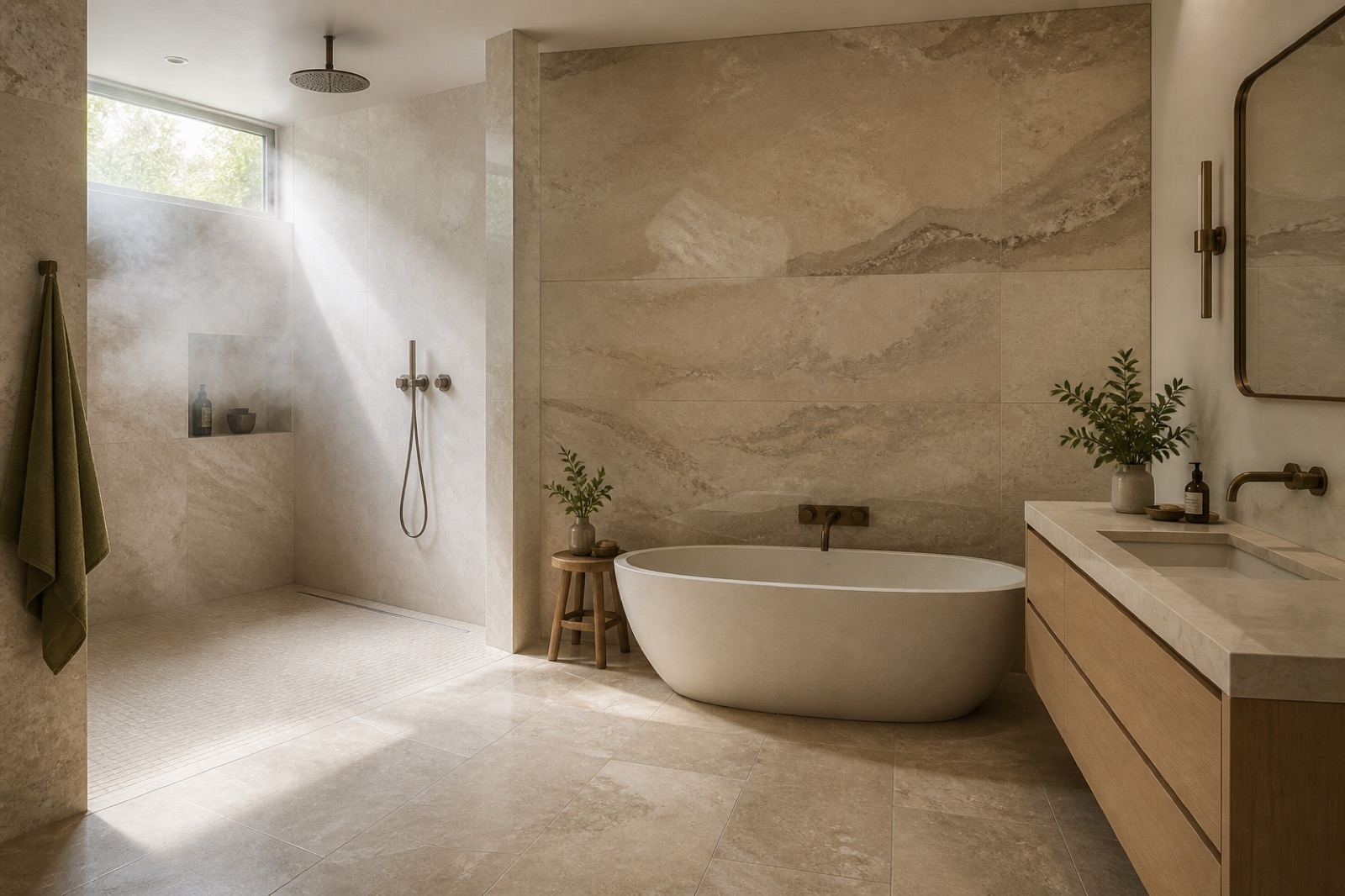
Natural stone is uniquely suited to this atmosphere. It can bring visual calm, tactile richness, and a lasting architectural quality to steam showers, wet rooms, tub surrounds, vanities, and quiet retreat spaces.
Start with the Experience
A successful spa-inspired bathroom begins with the feeling the space should create. Some rooms call for the soft, enveloping character of limestone or travertine. Others benefit from the movement of marble, the depth of quartzite, or the drama of a bookmatched feature wall.
Natural stone makes these spaces feel more connected to the elements. Light moves differently across a honed surface than a polished one. Warm, muted tones can create a sense of quiet, while a more expressive slab can turn a shower wall or vanity into a focal point.
Material and Finish Matter
Every stone has its own composition, porosity, density, and maintenance needs. The right choice depends on where it will be used and how the room will function over time. A wall behind a freestanding tub experiences different conditions than a shower floor or a steam enclosure.
Quartzite is often considered for wet-area applications because of its density and crystalline structure.
Marble offers unparalleled depth and beauty, particularly on vertical surfaces, vanities, and feature walls.
Limestone and travertine create warmth and texture, but their finish and sealing requirements should be considered carefully in wet environments.
Textured or honed finishes may be more appropriate for flooring where slip resistance is an important consideration.
The Details Behind a Lasting Installation
Waterproofing, slope, drainage, grout selection, proper sealing, and ventilation are essential parts of a stone bathroom. Stone should never be selected in isolation from the installation system beneath it. A knowledgeable fabricator and installer can help ensure that the visual result is supported by the right technical decisions.
Large-format stone can reduce grout lines and create a more continuous appearance, particularly in showers and wet rooms. At the same time, smaller pieces or mosaics may be useful where additional traction or flexibility is needed.
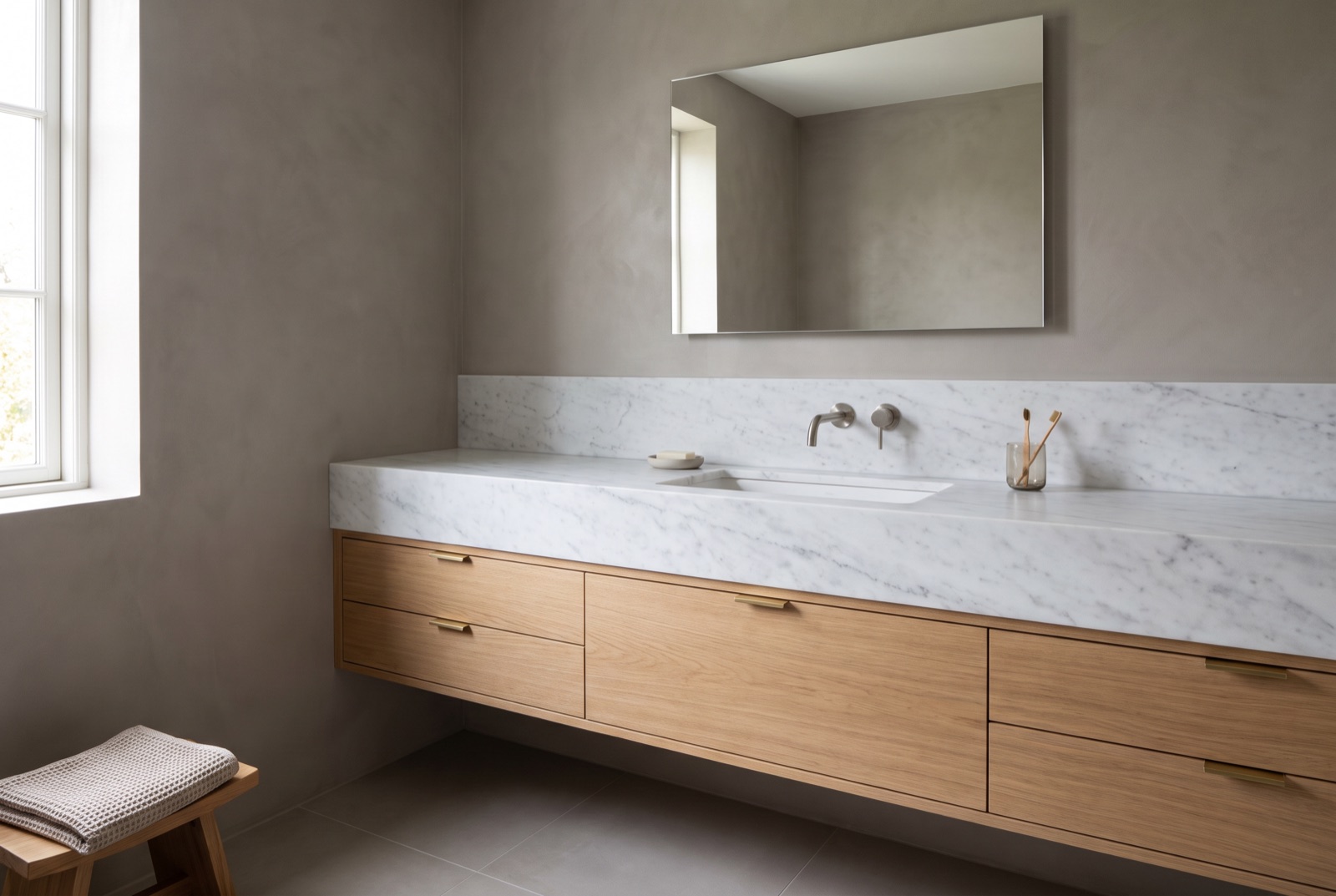
A wellness bathroom is measured less by its size than by the quality of the surfaces you touch every day.
Creating a Personal Retreat
Wellness bathrooms do not need to be oversized to feel luxurious. A stone vanity, a fully clad shower wall, a warm floor underfoot, or a carefully framed niche can transform the daily experience of the room. The strongest designs are often simple: a few materials, selected thoughtfully and allowed to speak for themselves.
At GEM International, we help designers, builders, and homeowners select stone with both the visual experience and the realities of the application in mind. Seeing the slab in person is an important first step toward creating a bathroom that feels restorative for years to come.