
Travertine and Limestone: The New Warm Neutral
For years, neutral interiors were often built around bright whites, cool grays, and smooth, uniform finishes. Today, designers are moving toward a warmer kind of restraint. The most compelling neutral spaces feel layered rather than blank, using materials with softness, texture, and a visible connection to the natural world.
Travertine and limestone are central to that shift. Their warm undertones, gentle variation, and quiet surface character allow them to feel timeless without feeling predictable.
A Softer Approach to Luxury
Travertine and limestone do not need dramatic veining to make an impression. Their appeal lies in subtlety: fossil markings, tonal movement, small cavities, and the way their surfaces respond to changing light. They can make a large room feel grounded or bring softness to a more minimal interior.
Travertine is a type of limestone formed through mineral deposits. It is known for its naturally occurring pores and linear movement, which can be filled or left more expressive depending on the intended finish. Limestone generally offers a denser, more uniform appearance, though every variety has its own color range, texture, and physical behavior.
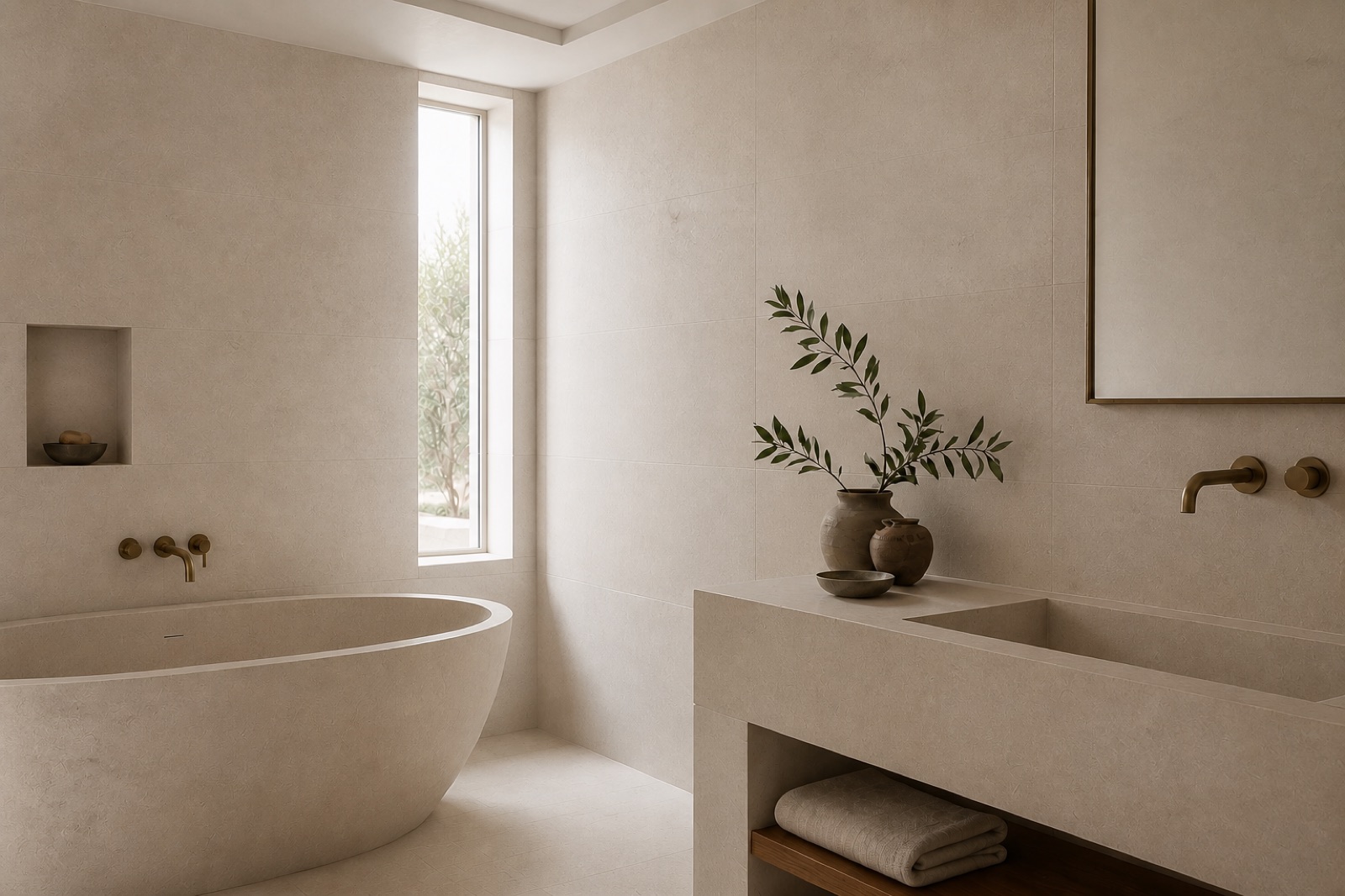
Where These Stones Work Best
Floors: Honed limestone and travertine can establish a calm, continuous foundation through entryways, kitchens, living spaces, and covered outdoor areas.
Bathrooms: Warm stone walls, vanities, and floors can make a bath feel more like a private retreat than a purely functional room.
Fireplace surrounds: Their quiet character allows the architecture of the fireplace to remain the focus.
Feature walls and niches: A tactile stone surface can add dimension without requiring a bold pattern or saturated color.
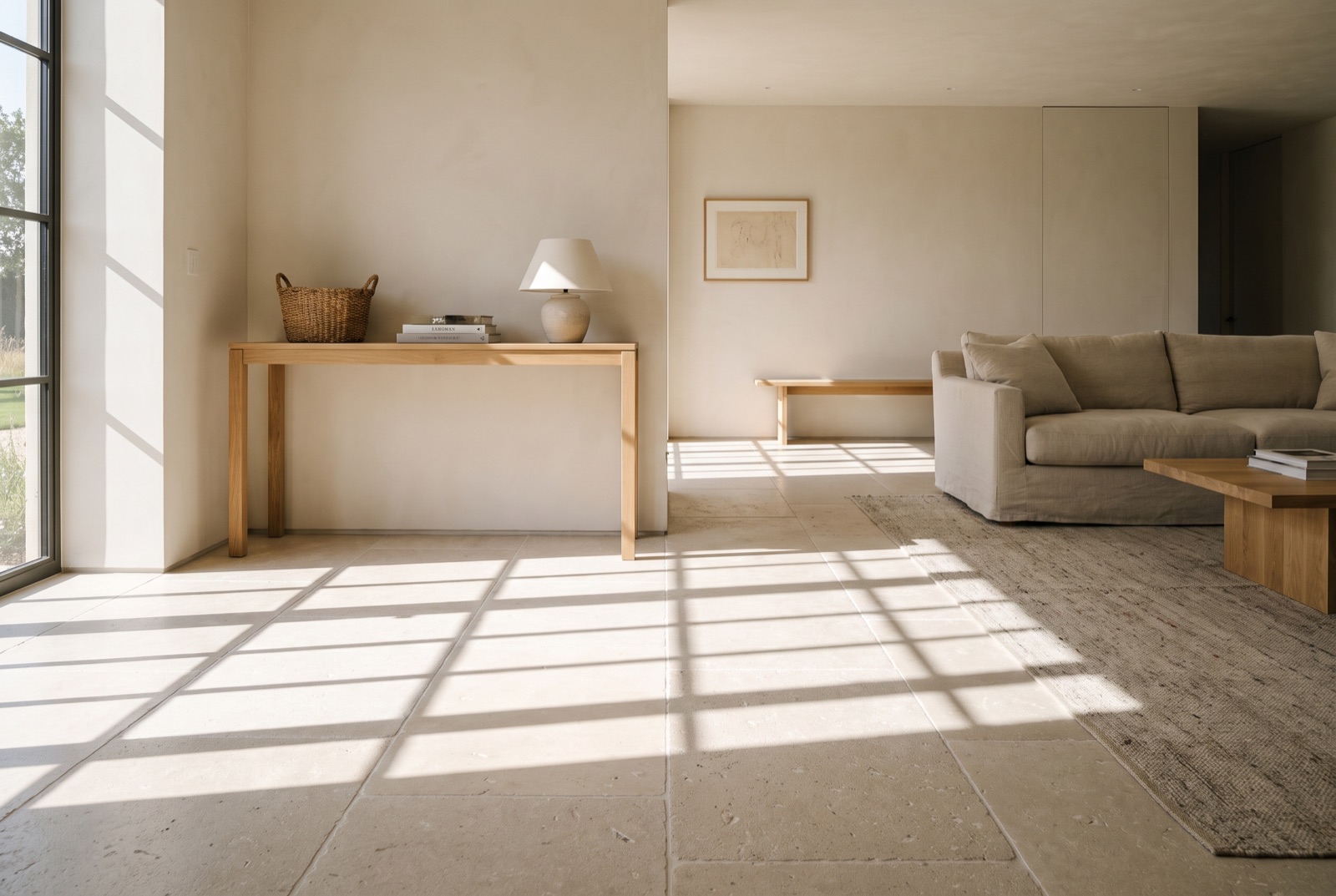
Finish Makes the Difference
A polished finish can emphasize color and reflect light, but a honed finish is often better suited to the relaxed, tactile look many homeowners and designers are seeking. Honed stone feels soft and natural under the hand, while brushed or textured finishes can bring additional depth to floors and walls.
The finish should always respond to the application. A bathroom floor, an exterior terrace, and a fireplace wall each have different performance needs. Slip resistance, water exposure, cleaning habits, and the desired visual effect should all be discussed before final selection.
Warm neutrals are not about the absence of color. They are about surfaces that hold light gently and reward a second look.
Designing with Warm Neutrals
Travertine and limestone pair naturally with white oak, walnut, linen, plaster, aged metals, and muted greens. They also work beautifully with stronger accents because their warmth provides a stable background for art, textiles, and collected furnishings.
The goal is not to create a room that feels empty. It is to create one that feels settled. These stones offer a sense of age, honesty, and material richness that can make a new space feel established from the beginning.
Visit GEM International to see how different limestone and travertine slabs read in person. Natural variation, finish, and scale are best understood when the material is viewed at full size.