
Designing a Kitchen Around One Continuous Stone Surface
A kitchen backsplash is often treated as a finishing detail. Today, it is becoming one of the most architectural surfaces in the room. Carrying a natural stone slab from the countertop to the upper cabinetry, open shelving, or ceiling creates a continuous field of color and movement that feels intentional, tailored, and enduring.
Whether the stone is quiet and tonal or marked by dramatic veining, a full-height backsplash allows the material to do more than protect a wall. It gives the kitchen depth, balance, and a sense of permanence.
Why Continuous Stone Feels So Considered
A single stone surface visually connects the working areas of a kitchen. Rather than dividing the room into countertop, wall tile, grout lines, and decorative accents, it creates a calmer composition. This can be especially effective in open-plan homes, where the kitchen is visible from living and dining areas.
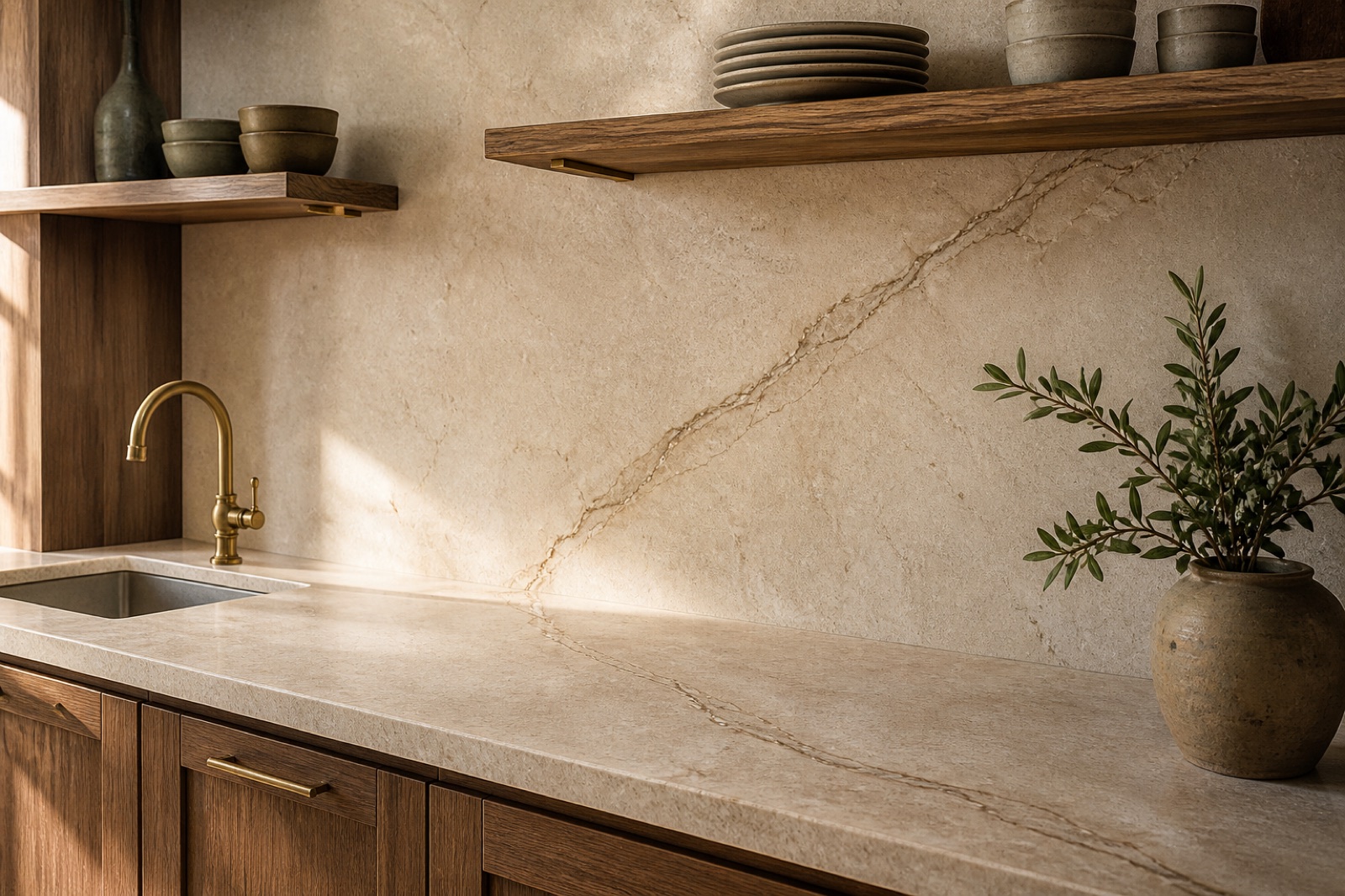
Natural stone brings its own movement to the design. Soft marble veining can create an airy, layered backdrop, while quartzite may introduce more depth and mineral character. A warmer limestone or travertine can make the room feel grounded and tactile. The right selection depends less on following a formula and more on understanding the atmosphere the kitchen needs to create.
Planning the Slab Before Fabrication
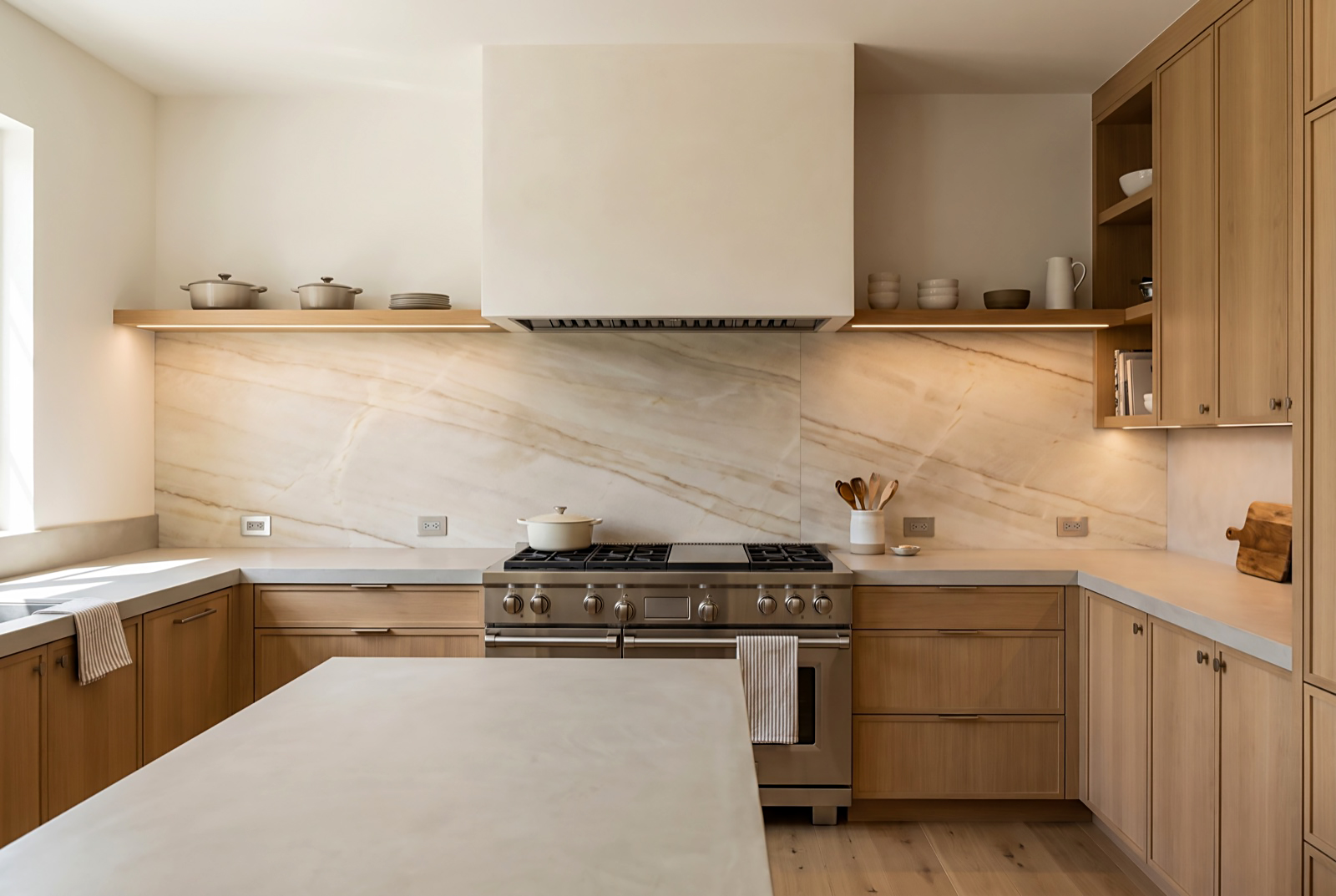
The most successful installations begin before the stone is cut. Designers and fabricators should consider where the veining will sit in relation to the cooktop, hood, shelves, windows, and cabinetry. A strong diagonal vein can become a focal point behind a range, while a quieter section of the slab may be better suited to a long run beneath upper cabinets.
Outlet placement also deserves early attention. Carefully planned outlets, switch plates, and shelf brackets help preserve the visual continuity of the stone. When possible, these details should be coordinated with the cabinetry and electrical plan before fabrication begins.
Choosing the Right Material
Marble creates softness, depth, and a classic architectural presence. It is especially compelling in kitchens designed for a lived-in, collected character.
Quartzite offers visual movement with strong performance qualities, making it a popular choice for active kitchens and full-height applications.
Limestone and travertine bring warmth and texture to quieter, more organic interiors.
Granite can provide rich mineral variation, strength, and a more granular visual character.
One material, carried without interruption, gives a kitchen a sense of order that no arrangement of tile can quite reproduce.
Pairing Stone with Cabinetry
The surrounding materials should allow the stone to read clearly. Warm white oak, walnut, painted neutrals, aged brass, and bronze all work beautifully beside natural stone because they add warmth without competing with its natural variation. In a more contemporary kitchen, a restrained cabinet profile and integrated hardware can make a strongly veined slab feel even more sculptural.
A full-height backsplash does not need to be dramatic to feel special. In many of the most refined kitchens, the impact comes from continuity: one thoughtful material carried across the room with confidence and care.
At GEM International, our team can help you view slabs at full scale and consider how their color, movement, and finish will perform within the larger kitchen design.